Category: News

  • Great Recession Gives Way to Not-So-Great Recovery

    The latest employment data shows that the U.S. is recovering, but still has a long way to go to

    April 4, 2014 2:18PM ET

    The March employment report shows America’s private sector workforce has finally reached levels not seen since before the financial meltdown in 2008.

    The Labor Department says 192,000 private sector jobs were created last month, pushing the total number in those jobs beyond the mark set in January 2008.

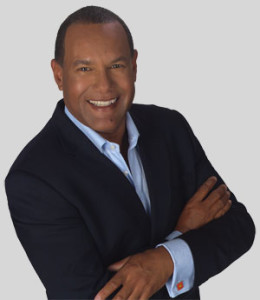
    “We’ve had 49-consecutive months of private sector job growth to the tune of almost nine million jobs,” Labor Secretary Tom Perez told Al Jazeera’s Ali Velshi. “And when you look at the job mix, over 90 percent of the jobs are full-time jobs, which is better than previous recoveries.”

    However, the news isn’t all that good.

    Government jobs still haven’t recovered. They remained flat in March.  Average hourly wages declined, and the number of part-time workers increased 225,000.

    “The jobs report this morning really nails down the view that this economy is not really accelerating nor is it really decelerating,” said Steven Ricchiuto, Chief Economist at Mizuho Securities. “We’re stuck in this glide path of an economy that’s either at or slightly below trend and there’s no evidence at all that we’re moving away from that.”

    Secretary Perez agrees a lot still needs to be done to get the economy and job creation on  stronger footing.

    “We’ve got to pick up the pace,” he said. “And the data point that clearly gives me the most concern is the continuing challenges confronting the long-term unemployed.”

    Ricchiuto agrees.

    “There are a lot of long-term unemployed,” he said. “Remember, this business cycle has been going on for quite some time and it’s been very, very disappointing.”

    Still, today’s report showed more encouraging signs that the job recovery is making slow and steady progress, and that the weakness seen in previous reports was a result of the bad winter weather.  One indication of that– construction jobs jumped by 19,000.

    “A labor market impacted by winter is now recovering at a gradual pace,” said Michael Dolega, Senior Economist at TD Economics. “The recovering housing market has also continued to add construction jobs, with the spring thaw likely to manifest in more sustained gains in homebuilding.”

    Other positives in the report: the labor force participation rate — the percentage of those working or actively looking for work — rose to 63.2 percent, from 63 percent. That suggests more people feel good enough about their prospects to try to get back into the workforce. And hours worked were higher.

    Dolega sees one other good sign: today’s data will likely keep the Federal Reserve from raising interest rates anytime soon.

    “Wage growth remains subdued and will remain a concern for both the sustainability of the consumer-led recovery and inflation,” he noted. “The Fed should have ample room to keep policy accommodative well into 2015, with the first rate hike unlikely to take place until the second half of that year.”

    Leave a comment and see more at my official blog site: http://www.mediamakersconsulting.wordpress.com
  • By The Stroke Of His Pen

    By The Stroke Of His Pen

    By Kimoy Leon Sing
    Story Updated: Mar 1, 2013 at 11:46 PM ECT

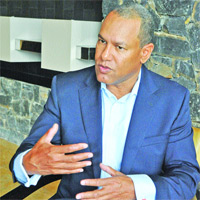
    Saving lives is what Dr Emile Allen does. His weapon of choice was once his scalpel but now he uses a pen and his voice to forge ahead in life.

    Taking life’s adversities and finding ways to turn them naturally into gifts, Dr Allen is proud to share his story from surgeon to patient through his inspirational book, Eaten By The Tiger- Surrendering to an Empowered Life.

    This book is the first for the retired urologist turned writer and motivational speaker who came to Trinidad recently to promote the book.

    A graduate of Northwestern University Medical School in Chicago, Illinois, USA, Dr Allen completed his general surgery internship and urology residency at the University of Iowa Hospital and Clinics. He is the former chairman of urology and vice chairman of surgery at Scripps Memorial Hospital in La Jolla, California. Despite having to give up on his chosen profession, the once active urologist has turned his passion for helping others in a different direction. He believes that through his motivational speeches and astute writing, he can touch more lives than he could as a surgeon.

    For the doctor, the switch in profession was indeed sudden and the self- realisation that followed shortly after that was a breakthrough in his life; something he wishes that could have happened to him a lot sooner.

    Dr Allen, “In 1998 I was operating on a patient trying to save their life when a piece of medical equipment malfunctioned and I barely escaped being electrocuted. I had a near-death experience. After the accident I had a traumatic brain injury and other injuries that took quite a few years for me to recuperate from. It had gotten to the point where I could not read a book; I could not count change because my concentration was so disrupted from the brain injury that I had to close down my practice.

    “I was 38 years old at the peak of my career. What was going through my mind at that time was gosh it’s gone; I’ve lost it all; how can I put my life back together again,” Dr Allen said.

    “With physical injuries in time it heals but what happens is the emotional injuries are often greater and sometimes linger on even after we have fully

    recovered physically. This was something I was struggling with after the accident because I was still trying to hold on to my shattered identity as that of a surgeon. After the injury I was not able to practise surgery so I had to transition and find a new purpose in life,” he said.

    “It lead to a journey of self-discovery; realiSing what was really important in life. Is it your identity that you are holding on to or is it the connections you have with others or was it with life in general? I realised that in order for me to overcome this adversity that I was going through at the time I realised that the quality of our life is determined by the emotional attachments we have placed on an event. So if you change the meaning of that emotional attachment to whatever life adversity you are facing; you will change the quality of your life. One of the major things I did was I reframed the incident into a gift and found a way to share that gift with others,” he added.

    Eaten By The Tiger—Surrendering to an Empowered Life the title of book, seemed fitting to the author who says it describes in length his personal journey and the tools needed to overcome hardships in life.

    He said, “From my book people will have specific steps that they can take to overcome life adversity and take a negative and turn it into a positive. People will understand that the emotional attachments we attribute to certain events in our life can be controlling and can control our identity. If we control the meaning of what has happen to us, again we can change our life.”

    Dr Allen admitted that although he misses surgery and being a surgeon his life has been more fulfilling than ever before.

    He said, “I have a different view of life now. I have the opportunity now to help thousands and potentially millions of people with my inspirational writings and public speaking.

    Whereas when I was a surgeon, I was only able to help a few people at a time—which was usually just the people that walked through my door—I feel now my reach is much greater. If I can in anyway share a thought or message with someone to improve their lives then I feel like I am doing the work that I was asked to do.” Eaten By The Tiger—Surrendering to an Empowered Life was launched February 10 on amazon.com as an e-book. Hard copies of the book are set to be released very soon at all major bookstores in Trinidad and Tobago and other parts of the world.

    http://www.trinidadexpress.com/sunday-mix/By_The_Stroke_Of_His_Pen-194424191.html

  • Jolt ends surgeon’s career, jump starts new outlook on life

    Jolt ends surgeon’s career, jump starts new outlook on life

    By Nicole Brochu, Staff writer

    6:33 AM EST, February 22, 2013

    Just seven years into a promising urology practice, Dr. Emile Allen was operating on a cancer patient when a jolt of electricity threw him off his feet — and out of the practice of medicine forever.

    His 10-year odyssey to self-discovery and healing taught him that when you think your life is over, it’s time to come up with a new definition of life.

    Allen is no longer a practicing surgeon, but he has dedicated himself to healing people in new ways. At the end of the month, the Boca Raton man, today an author, medical consultant and inspirational speaker, will release a new book he hopes will motivate the many people struggling like he was to make sense of tragedy.

    “When I had my near-death experience, I realized that in life, everything is on lease. Anything can be taken away from you in a heartbeat,” said Allen, 53. “You have to learn to let go of the physical and emotional attachments and start to be thankful for your struggles, because they help give you character.”

    In “Eaten by the Tiger: Surrendering to an Empowered Life,” Allen uses personal anecdotes from his time as a physician, patient and son of a cancer-stricken father to sketch out a path to healing that starts with eight steps: awareness, acceptance, letting go, faith, lack of judgment, gratitude, fighting fight-or-freeze reflexes, and reflection.

    The biggest lesson he hopes to impart: Tragedy doesn’t have to be the end of the road, just the beginning of another.

    “My accident was actually the best thing that ever happened to me,” Allen said. “I believe my life was saved that day so I could help the millions of people in the world who are struggling.”

    Of course, it took him years to come to that conclusion. On the day of his accident, in 1998, Allen was 38 and at what he considered “the height” of a career he had spent a lifetime building. A urologist who specialized in diseases of the urinary tract, he was using an electric scalpel to remove a patient’s cancerous kidney when the tool, which wasn’t grounded properly, sent an electric jolt through the patient’s bowel, into Allen’s left hand, up his arm, through his heart and brain and out his right ankle.

    Allen said he briefly passed out, then heard a voice say, twice, “I’m not ready for you yet.”

    The patient was fine, but Allen suffered life-altering side effects — seizures, nerve damage in his hand, depression, memory loss. Unable to drive, read or even count change at the grocery store, he closed his Pennsylvania urology practice and moved in with his parents in southern California. Under a doctor’s care, he was eventually put on nine different medications, taking a total of 36 pills a day.

    “It was really tough,” said Allen, who moved to Boca Raton three years ago. “The physical damage heals. We know that as surgeons. But it’s the emotional trauma that is far, far greater for people to deal with.”

    “Eaten by the Tiger,” from the “self-publishing alternative” company, Inspire On Purpose, is available now in e-book form ($9.99) on Amazon.com, barnesandnoble.com and other major bookstore websites. The hard back version ($21.99) will go on sale March 8. Go to eatenbythetiger.com for more information.

    [email protected]

    http://www.sun-sentinel.com/health/fl-surgeon-injury-book-20130226,0,861265.story


    Copyright © 2013, South Florida Sun-Sentinel


  • Is Brain Science the Key to Your Success?

    Is Brain Science the Key to Your Success?

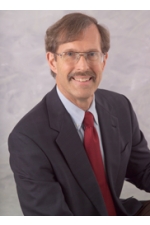
    James O’Brien

    AMEX Open Forum, December 17, 2012

    In the search of the holy grail of business success, one expert believes she has found the source. It’s inside your own brain.

    In her new book, The Entrepreneurial Instinct, investor Monica Mehta says the entrepreneurial instinct is a mostly quantifiable blend of brain parts and neurochemicals. However, Mehta also suggests that anyone can learn how to trigger the kinds of brain activity that front-load their projects to succeed.

    Inner Force of Nature

    Mehta points to two formulas for business success: a propensity for risk and the ability to adapt to the scenarios that emerge when taking those risks.

    She says a key factor driving those characteristics is dopamine, a neurotransmitter in the brain.

    “In the ability to take risky bets, there seems to be something happening on one side of the brain among entrepreneurs,” she says. “There’s a chemical release of dopamine in the reward pathway.”

    Tests conducted in 2008 at the University of Cambridge back up Mehta’s proposition: If you don’t have just the right mix of dopamine and dopamine-ready receptors in the frontal lobe of the brain, you’re probably more likely to resist risk. You also might not be as adaptable midstream during your start-up process.

    Another section of the brain, the amygdala, is where humans tend to house memories connected to pain. Entrepreneurs, Mehta writes, may in fact be people for whom that memory center works in a particular way.

    “To take rewarding risks, you have to shut off the fear,” Mehta says. “For most of us, fear is a knee-jerk reaction.”

    Want to capitalize on that dopamine-rich impulse? You’ll need to resist the list-making, double-checking, fear-mongering nub of your own amygdala, Mehta says.

    Developing a Risky and Adaptable Brain

    You may not have the brain chemistry to become the next Steve Jobs, but Mehta says entrepreneurs aren’t shackled by biology. She proposes a second formula: not one of chemicals and physical processes, but one based in action and development over time.

    For one thing, business owners can build a formula for success into their day-to-day work. The thrust of this equation is to deemphasize behaviors that make our pre-frontal lobes, where the amygdala lives, kick in.

    She suggests postponing the part where you run all the numbers and envision all the obstacles until you’re deep into the process.

    Also, remember that old adage about learning from failure as being an important part of success? That could be the wrong approach. Since the formula for replicating what the best entrepreneurial brains do depends on dopamine, you’ve got keep the juices flowing. Front-loading your work with numerous small successes and reward experiences can trigger the kind of dopamine levels that encourage the brain to keep churning on the creative front.

    Rack up early wins. Each time, you’re boosting your own levels of dopamine.

    Also, visualize your own success. Mehta says when it comes to dopamine, her research shows that the brain doesn’t care a whole lot about whether your successes are real or just envisioned.

    And protect your assets. Freewheeling all the way to beta may prompt you to take rewarding risks and minimize the fears that can hinder a successful launch, but it can also prompt a lot of cash burn. Running out of funds (obviously) undermines all your otherwise good work.

    An Entrepreneur (and Neuroscientist) Weighs In

    “Early wins likely influence those areas of the brain involved in pleasure and reward,” agrees Dr. Barry Sandrew, a neuroscientist and digital colorization entrepreneur in the film industry. ”It’s a matter of conditioning. Incremental successes tend to lead a person to even greater successes because the risks, while still there, become less of a focus.”

    Sandrew adds that “the act of positive thinking, optimism can be rewarding in of itself. To some people, this comes naturally while others have to practice it.”

    And that’s the difference, Mehta suggests, between the entrepreneurial instinct that for some is already built in and for others must be worked at. She’s encouraging new business owners to not worry too much about the former, and to emphasize ways to bring about the latter. It’s the brainy-chemistry path to success.

    http://www.openforum.com/articles/is-brain-science-the-key-to-your-success/


  • Why Your Intellectual Property Is at Risk

    Why Your Intellectual Property Is at Risk

    Why Your Intellectual Property Is at Risk

    James O’Brien

    AMEX Open Forum, August 16, 2012

    Is your intellectual property protected?

    Small-business owners are often saddled with enough work to fill a 48-hour day. But in efforts to keep your business alive, missing a few key steps in protecting your “great idea” can ultimately lead to your losing that idea to IP theft.

    A Growing Problem: Intellectual Property Theft in the U.S.

    Recent statistics from the U.S. International Trade Commission tell the tale:

    • Patent, copyright, trademark and other kinds of IP infringement investigations went up 37 percent in 2011 from fiscal year 2010.
    • The 337 investigations opened under Section 337, in 2011, represent the greatest number of new inquiries started in any given year tracked by the Commission.

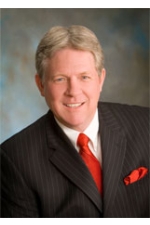
    “This clearly points to a much larger problem and I am willing to bet that the statistics for this current decade will be much higher,” says Jerry Mills, the owner of an accounting firm and a near-victim of IP theft. “Businesses, especially small and growing businesses like ours, are prime targets for intellectual property misappropriation and must take proper measures to protect their intellectual property and trade secrets.”

    Ideas on the Line: The Story of B2B CFO

    When Mills started B2B CFO in Phoenix, Ariz., in 1987, he pioneered an idea that he calls “CFO for hire.” His firm provides focused chief financial officer services to mid-market and growing entrepreneurial companies.

    “Every company, regardless of size, needs a chief financial officer,” Mills says. “With us, people can afford a CFO without hiring a full-time person. On a 1099 basis, we make those services affordable.”

    In April 2006, Mills’s company brought on a partner with the firm, providing just those services, but it didn’t turn out well. He left the company after violating its rules in January 2007, and almost before Mills knew it, his former partner had started his own company. “It did exactly what we’re doing, providing CFO services to companies,” Mills says.

    The lawsuit that Mills filed in 2009, which claimed copyright infringement, among other things, was settled this year for $220,000 and an admission of wrongdoing from the ex-employee.

    “The legals fees and court costs exceeded $400,000,” Mills says. “But the biggest cost was just the distraction on my part and that of key people in my company. All the daily interruptions, the affidavits, the interrogatories, the court dates. It just goes on and on and on. Taking the focus off the company, that’s a big cost. That really hurt.”

    What to Do: Protecting Your Small-Business IP

    “Many companies, like B2B CFO, are targets of intellectual-property misappropriation each year,” says Mark Elliott, executive vice president for the Global Intellectual Property Center, an affiliate of the U.S. Chamber of Commerce.

    “In the 21st century, innovation and creativity will remain the driving forces behind America’s competitiveness and economic future,” he says. “Neither can thrive without the strong intellectual property rights embodied in patents, copyrights, and trademarks. That is why these important rights must be constantly protected and promoted.”

    And while Elliott’s organization works on advocacy along those lines, small-business owners can protect their IP with these proactive steps:

    File completely and quickly. Recent changes to IP law specify that the filers of patents on things such as processes and inventions must be first-to-file in the court’s eyes. The full load of paperwork on a patent is due to the U.S. Patent and Trademark Office within 12 months of initial application.

    Search for infringers.What you write down is yours from the start, but that doesn’t mean you can afford to not look out for those who would claim it as their own. Use the Internet, stay aware of where your work is, and where it should not be.

    Non-disclosure as the rule. Partners, employees, whoever is privy to your company’s inner workings. These are the folk from whom you want a signed NDA.

    Names and logos. File yours with the U.S. Patent and Trademark Office. As with your other IP, make a practice to checking to see that it is not used by other parties. Do this both before and also after you file.

    James O’Brien blogs for numerous clients on topics that include: film, social media, writing, technology, marketing, business, and design. He is a correspondent for Boston University’s Research Magazine and for The Commons a journal covering higher-education. He has written extensively as a news correspondent for The Boston Globe. James blogs via Contently.com.

    http://www.openforum.com/articles/your-intellectual-property-is-at-risk


  • B2B CFO Announces First Victory in Intellectual Property Suit

    B2B CFO Announces First Victory in Intellectual Property Suit

    Plagued by Multiple Cases of Theft of Intellectual Property, B2B CFO Makes Very Clear Statement with Recent Court Ruling

    PHOENIX–(EON: Enhanced Online News)–In 2009, Jerry L. Mills, founder of B2B CFO, the nation’s largest provider of CFO services to small businesses, realized that his company had fallen victim to intellectual property theft.

    “This is a battle that we will keep on fighting” (more…)